
Guideಮಾರ್ಗದರ್ಶಿ
Kambala explained: the buffalo race of coastal Karnatakaಕಂಬಳ ಎಂದರೇನು: ಕರಾವಳಿ ಕರ್ನಾಟಕದ ಎಮ್ಮೆ ಓಟ
What Kambala is, where and when it happens, how a race works, and why it matters to the farming communities of Tulu Nadu.ಕಂಬಳ ಎಂದರೇನು, ಎಲ್ಲಿ ಮತ್ತು ಯಾವಾಗ ನಡೆಯುತ್ತದೆ, ಓಟ ಹೇಗೆ ನಡೆಯುತ್ತದೆ, ಮತ್ತು ತುಳುನಾಡಿನ ರೈತ ಸಮುದಾಯಗಳಿಗೆ ಅದು ಏಕೆ ಮುಖ್ಯ.
27 Nov 2026 · 3 min readನವೆಂಬರ್ 27, 2026 · 3 ನಿಮಿಷದ ಓದು
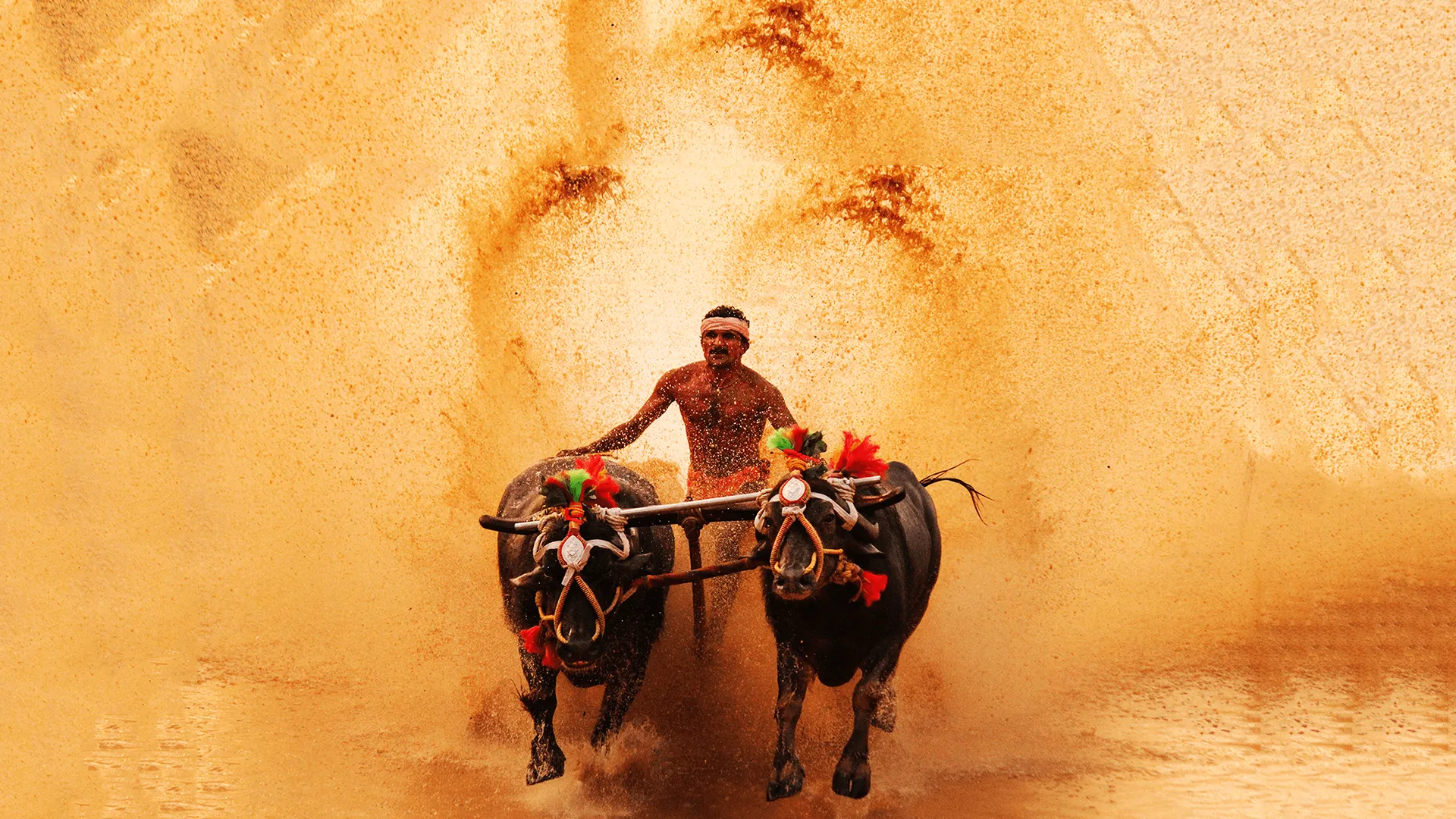
Kambala is a traditional buffalo race held in water-filled paddy fields in coastal Karnataka. A runner holds the ropes behind a pair of buffaloes and drives them down a muddy track, and the mud flies up behind them. It is one of the best-known traditions of Tulu Nadu, the coastal region around Dakshina Kannada and Udupi.
Where and when
Kambala is mainly held in Dakshina Kannada and Udupi districts, and in the Kasaragod district of Kerala just to the south. The season runs roughly from November to March, after the paddy harvest. Each venue usually holds its Kambala on a set weekend, and the dates are announced by the organising committee, sometimes only a few weeks ahead.
How a race works
- The track is a paddy field flooded with water, so the surface is soft slush.
- Each team is a pair of buffaloes joined by a wooden yoke across their necks, with a runner who steers them from behind. Two teams usually race side by side.
- The track is short, in the region of 100 metres, so a race is over in seconds.
- Races are run in categories, and teams are timed. Many Kambalas run through a full day, and some go on into the night.
- Different categories test different things, such as pure speed or how high the mud splash reaches. Ask a local what the categories are at the event you visit.
The buffaloes are usually raised and trained by farming families, who take real pride in them. At a big Kambala you will often see the animals decorated with colourful headgear.
A farming tradition
Nobody can say exactly when Kambala began, and some historians trace it back more than a thousand years. In its early form it was a way for farmers to thank the gods and spirits for protecting their crops, and it marked the start of preparing the fields for the second crop. It was often held on days linked to Bhuta worship, such as the festivals of Kodamanithaya and Jumadi, and it flourished under the patronage of local kings and well-known households. Before a race the buffaloes were paraded to the beat of traditional drums.
Today it is a well-organised sport. Roughly 45 Kambalas are held each year across the Mangaluru, Udupi and Kasaragod districts, and about 18 of them run under the banner of the Kambala Samithi. The rest are supported by temples, families traditionally linked to the sport and other local groups. The biggest ones draw crowds in the tens of thousands, and winning one is still a matter of great pride. The prize used to be coconuts and a bunch of bananas, and larger events now give cash awards.
Some well-known Kambalas
Among the many, these are often named: the Kadri Kambala in Mangaluru, the Mulki Seeme Arasu Kambala, the Katapadi Beedu Kambala, the Miyar Kambala near Karkala, the Koti-Chennayya Kambala (held at several places, including Moodbidri), the Lava-Kusha Kambala at Bantwal, the Jaya-Vijaya Kambala at Karkala, and the Surya-Chandra Kambala at Belthangady and Shirva. Dates and organisers change from year to year, so check before you plan.
What about the debate?
Kambala has been discussed in public, including by animal welfare groups, and the rules for how races are run have been the subject of court cases and state law. The rules today are set by law and by the organising committees. If you have questions about how the animals are treated, ask us. We are happy to talk about it honestly.
See one with us
We are planning trips to the Miyar Kambala (2 January 2027) and the Moodbidri Kambala (23 January 2027). See the Events page, or read what to wear, eat and expect before you go.
ಕಂಬಳ ಕರಾವಳಿ ಕರ್ನಾಟಕದಲ್ಲಿ ನೀರು ತುಂಬಿದ ಭತ್ತದ ಗದ್ದೆಯಲ್ಲಿ ನಡೆಯುವ ಸಾಂಪ್ರದಾಯಿಕ ಎಮ್ಮೆ ಓಟ. ಓಟಗಾರ ಜೋಡಿ ಎಮ್ಮೆಗಳ ಹಿಂದೆ ಹಗ್ಗ ಹಿಡಿದು ಅವುಗಳನ್ನು ಕೆಸರಿನ ಟ್ರ್ಯಾಕ್ನಲ್ಲಿ ಓಡಿಸುತ್ತಾರೆ, ಹಿಂದೆ ಕೆಸರು ಚಿಮ್ಮುತ್ತದೆ. ದಕ್ಷಿಣ ಕನ್ನಡ ಮತ್ತು ಉಡುಪಿ ಸುತ್ತಲಿನ ಕರಾವಳಿ ಪ್ರದೇಶವಾದ ತುಳುನಾಡಿನ ಅತ್ಯಂತ ಪ್ರಸಿದ್ಧ ಸಂಪ್ರದಾಯಗಳಲ್ಲಿ ಇದೂ ಒಂದು.
ಎಲ್ಲಿ ಮತ್ತು ಯಾವಾಗ
ಕಂಬಳ ಮುಖ್ಯವಾಗಿ ದಕ್ಷಿಣ ಕನ್ನಡ ಮತ್ತು ಉಡುಪಿ ಜಿಲ್ಲೆಗಳಲ್ಲಿ ಹಾಗೂ ದಕ್ಷಿಣಕ್ಕೆ ಹೊಂದಿಕೊಂಡಿರುವ ಕೇರಳದ ಕಾಸರಗೋಡು ಜಿಲ್ಲೆಯಲ್ಲಿ ನಡೆಯುತ್ತದೆ. ಋತು ಸುಮಾರು ನವೆಂಬರ್ನಿಂದ ಮಾರ್ಚ್ವರೆಗೆ, ಭತ್ತದ ಕೊಯ್ಲಿನ ನಂತರ. ಪ್ರತಿ ತಾಣದಲ್ಲಿ ಸಾಮಾನ್ಯವಾಗಿ ನಿಗದಿತ ವಾರಾಂತ್ಯದಲ್ಲಿ ಕಂಬಳ ನಡೆಯುತ್ತದೆ, ಮತ್ತು ದಿನಾಂಕಗಳನ್ನು ಆಯೋಜನಾ ಸಮಿತಿ ಪ್ರಕಟಿಸುತ್ತದೆ, ಕೆಲವೊಮ್ಮೆ ಕೆಲವೇ ವಾರಗಳ ಮೊದಲು.
ಓಟ ಹೇಗೆ ನಡೆಯುತ್ತದೆ
- ಟ್ರ್ಯಾಕ್ ನೀರು ತುಂಬಿದ ಭತ್ತದ ಗದ್ದೆ, ಹಾಗಾಗಿ ನೆಲ ಮೆತ್ತಗಿನ ಕೆಸರು.
- ಪ್ರತಿ ತಂಡ ಕುತ್ತಿಗೆಗೆ ಮರದ ನೊಗ ಕಟ್ಟಿದ ಒಂದು ಜೋಡಿ ಎಮ್ಮೆಗಳು ಮತ್ತು ಹಿಂದಿನಿಂದ ಓಡಿಸುವ ಓಟಗಾರ. ಸಾಮಾನ್ಯವಾಗಿ ಎರಡು ತಂಡಗಳು ಅಕ್ಕಪಕ್ಕದಲ್ಲಿ ಓಡುತ್ತವೆ.
- ಟ್ರ್ಯಾಕ್ ಚಿಕ್ಕದು, ಸುಮಾರು 100 ಮೀಟರ್ ಆಸುಪಾಸು, ಹಾಗಾಗಿ ಓಟ ಕೆಲವೇ ಸೆಕೆಂಡುಗಳಲ್ಲಿ ಮುಗಿಯುತ್ತದೆ.
- ಓಟಗಳು ವಿಭಾಗಗಳಲ್ಲಿ ನಡೆಯುತ್ತವೆ ಮತ್ತು ತಂಡಗಳ ಸಮಯ ಅಳೆಯಲಾಗುತ್ತದೆ. ಅನೇಕ ಕಂಬಳಗಳು ಇಡೀ ದಿನ ನಡೆಯುತ್ತವೆ, ಕೆಲವು ರಾತ್ರಿಯವರೆಗೂ ಮುಂದುವರಿಯುತ್ತವೆ.
- ಬೇರೆ ಬೇರೆ ವಿಭಾಗಗಳು ವೇಗ ಅಥವಾ ಕೆಸರು ಎಷ್ಟು ಎತ್ತರಕ್ಕೆ ಚಿಮ್ಮುತ್ತದೆ ಎಂಬಂತಹ ಬೇರೆ ಬೇರೆ ಸಾಮರ್ಥ್ಯಗಳನ್ನು ಪರೀಕ್ಷಿಸುತ್ತವೆ. ನೀವು ಹೋಗುವ ಕಂಬಳದಲ್ಲಿ ವಿಭಾಗಗಳು ಯಾವುವು ಎಂದು ಸ್ಥಳೀಯರನ್ನು ಕೇಳಿ.
ಎಮ್ಮೆಗಳನ್ನು ಸಾಮಾನ್ಯವಾಗಿ ರೈತ ಕುಟುಂಬಗಳು ಸಾಕಿ ತರಬೇತಿ ನೀಡುತ್ತಾರೆ ಮತ್ತು ಅವರಿಗೆ ಅವುಗಳ ಬಗ್ಗೆ ಹೆಮ್ಮೆ ಇರುತ್ತದೆ. ದೊಡ್ಡ ಕಂಬಳದಲ್ಲಿ ಪ್ರಾಣಿಗಳು ವರ್ಣರಂಜಿತ ಅಲಂಕಾರದಲ್ಲಿ ಕಾಣುತ್ತವೆ.
ಒಂದು ಕೃಷಿ ಸಂಪ್ರದಾಯ
ಕಂಬಳ ಯಾವಾಗ ಆರಂಭವಾಯಿತು ಎಂದು ಯಾರೂ ನಿಖರವಾಗಿ ಹೇಳಲಾರರು, ಕೆಲವು ಇತಿಹಾಸಕಾರರು ಅದನ್ನು ಸಾವಿರ ವರ್ಷಗಳಿಗೂ ಹಿಂದಕ್ಕೆ ಕೊಂಡೊಯ್ಯುತ್ತಾರೆ. ಆರಂಭದ ರೂಪದಲ್ಲಿ ಇದು ಬೆಳೆಗಳನ್ನು ಕಾಪಾಡಿದ ದೇವರು ಮತ್ತು ದೈವಗಳಿಗೆ ರೈತರು ಕೃತಜ್ಞತೆ ಸಲ್ಲಿಸುವ ವಿಧಾನವಾಗಿತ್ತು, ಮತ್ತು ಎರಡನೇ ಬೆಳೆಗೆ ಗದ್ದೆ ಸಿದ್ಧಪಡಿಸುವ ಆರಂಭದ ಸೂಚನೆಯಾಗಿತ್ತು. ಇದು ಕೊಡಮಣಿತ್ತಾಯ ಮತ್ತು ಜುಮಾದಿಯಂತಹ ಭೂತಾರಾಧನೆಗೆ ಸಂಬಂಧಿಸಿದ ದಿನಗಳಲ್ಲಿ ನಡೆಯುತ್ತಿತ್ತು ಮತ್ತು ಸ್ಥಳೀಯ ಅರಸರು ಹಾಗೂ ಪ್ರಸಿದ್ಧ ಮನೆತನಗಳ ಪೋಷಣೆಯಲ್ಲಿ ಬೆಳೆಯಿತು. ಓಟದ ಮೊದಲು ಎಮ್ಮೆಗಳನ್ನು ಸಾಂಪ್ರದಾಯಿಕ ವಾದ್ಯಗಳ ನಾದದೊಂದಿಗೆ ಮೆರವಣಿಗೆ ಮಾಡಲಾಗುತ್ತಿತ್ತು.
ಇಂದು ಇದು ಸುವ್ಯವಸ್ಥಿತ ಕ್ರೀಡೆ. ಮಂಗಳೂರು, ಉಡುಪಿ ಮತ್ತು ಕಾಸರಗೋಡು ಜಿಲ್ಲೆಗಳಲ್ಲಿ ವರ್ಷಕ್ಕೆ ಸುಮಾರು 45 ಕಂಬಳಗಳು ನಡೆಯುತ್ತವೆ, ಅವುಗಳಲ್ಲಿ ಸುಮಾರು 18 ಕಂಬಳ ಸಮಿತಿಯ ಅಡಿಯಲ್ಲಿ ನಡೆಯುತ್ತವೆ. ಉಳಿದವುಗಳಿಗೆ ದೇವಾಲಯಗಳು, ಸಂಪ್ರದಾಯದಿಂದ ಕಂಬಳದೊಂದಿಗೆ ಬೆಸೆದ ಮನೆತನಗಳು ಮತ್ತು ಇತರ ಸ್ಥಳೀಯ ಗುಂಪುಗಳು ಬೆಂಬಲ ನೀಡುತ್ತವೆ. ದೊಡ್ಡ ಕಂಬಳಗಳಿಗೆ ಹತ್ತಾರು ಸಾವಿರ ಜನ ಸೇರುತ್ತಾರೆ, ಮತ್ತು ಗೆಲ್ಲುವುದು ಈಗಲೂ ದೊಡ್ಡ ಹೆಮ್ಮೆಯ ವಿಷಯ. ಹಿಂದೆ ಬಹುಮಾನ ತೆಂಗಿನಕಾಯಿ ಮತ್ತು ಒಂದು ಗೊನೆ ಬಾಳೆಹಣ್ಣಾಗಿತ್ತು, ಈಗ ದೊಡ್ಡ ಕಂಬಳಗಳಲ್ಲಿ ನಗದು ಬಹುಮಾನ ನೀಡಲಾಗುತ್ತದೆ.
ಕೆಲವು ಪ್ರಸಿದ್ಧ ಕಂಬಳಗಳು
ಹಲವಾರು ಕಂಬಳಗಳಲ್ಲಿ ಇವು ಹೆಚ್ಚಾಗಿ ಹೆಸರಿಸಲ್ಪಡುತ್ತವೆ: ಮಂಗಳೂರಿನ ಕದ್ರಿ ಕಂಬಳ, ಮೂಲ್ಕಿ ಸೀಮೆ ಅರಸು ಕಂಬಳ, ಕಟಪಾಡಿ ಬೀಡು ಕಂಬಳ, ಕಾರ್ಕಳದ ಬಳಿಯ ಮಿಯಾರ್ ಕಂಬಳ, ಕೋಟಿ-ಚೆನ್ನಯ್ಯ ಕಂಬಳ (ಮೂಡುಬಿದಿರೆ ಸೇರಿದಂತೆ ಹಲವೆಡೆ ನಡೆಯುತ್ತದೆ), ಬಂಟ್ವಾಳದ ಲವ-ಕುಶ ಕಂಬಳ, ಕಾರ್ಕಳದ ಜಯ-ವಿಜಯ ಕಂಬಳ, ಹಾಗೂ ಬೆಳ್ತಂಗಡಿ ಮತ್ತು ಶಿರ್ವದ ಸೂರ್ಯ-ಚಂದ್ರ ಕಂಬಳ. ದಿನಾಂಕ ಮತ್ತು ಆಯೋಜಕರು ವರ್ಷದಿಂದ ವರ್ಷಕ್ಕೆ ಬದಲಾಗುತ್ತಾರೆ, ಹಾಗಾಗಿ ಯೋಜಿಸುವ ಮೊದಲು ಖಚಿತಪಡಿಸಿ.
ಚರ್ಚೆಯ ಬಗ್ಗೆ ಏನು?
ಕಂಬಳದ ಬಗ್ಗೆ ಪ್ರಾಣಿ ಕಲ್ಯಾಣ ಸಂಘಟನೆಗಳು ಸೇರಿದಂತೆ ಸಾರ್ವಜನಿಕವಾಗಿ ಚರ್ಚೆ ನಡೆದಿದೆ, ಮತ್ತು ಓಟಗಳನ್ನು ಹೇಗೆ ನಡೆಸಬೇಕು ಎಂಬ ನಿಯಮಗಳು ನ್ಯಾಯಾಲಯದ ಪ್ರಕರಣಗಳು ಮತ್ತು ರಾಜ್ಯ ಕಾನೂನಿನ ವಿಷಯವಾಗಿವೆ. ಈಗಿನ ನಿಯಮಗಳನ್ನು ಕಾನೂನು ಮತ್ತು ಆಯೋಜನಾ ಸಮಿತಿಗಳು ನಿರ್ಧರಿಸುತ್ತವೆ. ಪ್ರಾಣಿಗಳನ್ನು ಹೇಗೆ ನಡೆಸಿಕೊಳ್ಳಲಾಗುತ್ತದೆ ಎಂಬ ಬಗ್ಗೆ ನಿಮಗೆ ಪ್ರಶ್ನೆಗಳಿದ್ದರೆ ನಮ್ಮನ್ನು ಕೇಳಿ. ಪ್ರಾಮಾಣಿಕವಾಗಿ ಮಾತನಾಡಲು ನಾವು ಸಿದ್ಧ.
ನಮ್ಮೊಂದಿಗೆ ನೋಡಿ
ಮಿಯಾರ್ ಕಂಬಳ (2 ಜನವರಿ 2027) ಮತ್ತು ಮೂಡುಬಿದಿರೆ ಕಂಬಳ (23 ಜನವರಿ 2027) ಕ್ಕೆ ಪ್ರವಾಸಗಳನ್ನು ಯೋಜಿಸುತ್ತಿದ್ದೇವೆ. ಕಾರ್ಯಕ್ರಮಗಳ ಪುಟ ನೋಡಿ, ಅಥವಾ ಹೋಗುವ ಮೊದಲು ಏನು ಧರಿಸಬೇಕು, ತಿನ್ನಬೇಕು, ನಿರೀಕ್ಷಿಸಬೇಕು ಓದಿ.